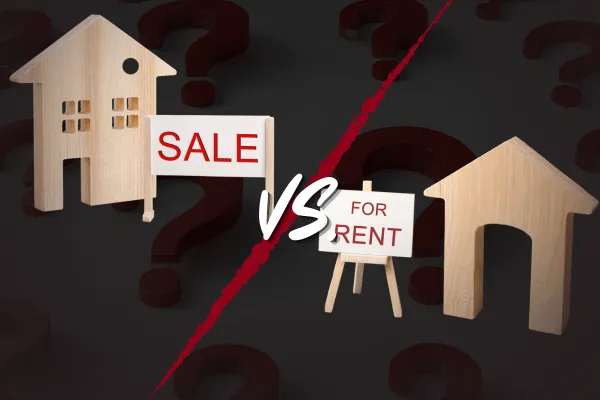
Renting vs. Buying - The Tradeoff Many Don't Consider
If you've been asking yourself whether it even makes sense to buy a home right now, you're not alone. With today's mortgage rates and home prices, staying put in a rental can feel like the safer, smarter move. For some people, it genuinely is - and there's no shame in that.
But if you're seriously weighing your options, there's one part of this conversation that almost never gets enough attention: what each choice is doing for your financial future. Let me break it down.
What Renting Gives You - And What It Doesn't
Renting has real advantages. I'm not going to sugarcoat that. Lower upfront costs, less maintenance stress, and the freedom to pick up and move - those are legitimate benefits depending on where you are in life.

However, here's what renting doesn't give you: a stake in your own future. According to a Bank of America survey, 70% of aspiring homeowners worry about what long-term renting means for their financial stability - and that concern is well-founded.
"Paying rent doesn't build equity. You get a place to live, but no ownership stake, no price appreciation, and no asset to leverage for future borrowing or investment." - Yahoo Finance
The flexibility of renting is real - but it comes at a quiet, long-term cost that most people don't fully feel until years later.
How Owning a Home Builds Real Wealth Over Time
Here's the thing about homeownership that I talk about with my clients all the time: it's not a get-rich-quick move. It's a slow, steady, remarkably consistent way to build wealth. And the mechanism behind it is simple - equity.
Every mortgage payment you make chips away at what you owe and increases what you own. On top of that, as home values rise over time (which they historically do), your equity grows even faster. It compounds.

And the numbers tell the story clearly. The National Association of Realtors (NAR) reports that the average homeowner's net worth is 43 times greater than that of a renter:
Average Homeowner Net Worth: $430,000
Average Renter Net Worth: $10,000
That's not because homeowners are smarter or make wildly different financial decisions every day. It's because over time, their monthly housing payments are building something - while a renter's payments build their landlord's wealth instead.
Think of it this way: a home is essentially a savings account you get to live in.
The Gap Is Getting Wider, Not Smaller
What makes this even more striking is the trend over time. The net worth gap between homeowners and renters hasn't been narrowing - it's been growing. Each year, homeowners accumulate more, and renters largely stay in place financially.
Even in 2025, a year when home price growth moderated in many markets (including here in Austin), homeowners still pulled further ahead. That's the compounding effect of equity at work.
This is something I covered in depth in my post on What Lowering Interest Rates Means for Potential Home Buyers in Austin - even in a cooling market, homeowners are building something renters simply aren't.
So, When Should You Buy?
Here's my honest take: buying a home is the right move - when it's the right move for you. Not everyone is in a position to buy right now, and timing matters. The long-term financial case for homeownership is strong, but only if your personal situation supports it.
What that means practically is:
• Your budget can support a mortgage payment without financial strain
• You plan to stay in the home long enough to build meaningful equity (typically 3–5+ years)
• You've spoken with a lender and understand what you actually qualify for
• You're emotionally and practically ready for the responsibilities of ownership
If those boxes aren't checked yet, renting while you prepare is a completely sound strategy. But the keyword is while you prepare - not instead of planning.
If you're thinking about timing, I'd also encourage you to read my post on 10 Questions You Should Answer Before You Buy a Home - it's a great starting point for honest self-assessment.
The Real Question Is: Whose Mortgage Are You Paying?
I love asking this question because it reframes the whole conversation. Every month, you're paying for someone's mortgage. When you rent, it's your landlord's. When you own, it's yours - and every payment puts money into an asset you control.
That doesn't mean renting is always wrong. But it does mean that the cost of waiting isn't zero. Time in the market has historically mattered more than timing the market - and every year you delay is a year of equity you didn't build.
If you're keeping an eye on the Austin real estate landscape, my Mueller Market Update videos on YouTube are a great resource for staying current on what's happening locally.
Ready to Run the Numbers?
The first step isn't signing a contract - it's having a conversation. Whether you're thinking about buying in the next 90 days or the next few years, let's talk through your goals, your budget, and what's realistic in today's market.
You might find that buying is closer than you think. Or you might discover exactly what you need to do to get there. Either way, you'll be making your decision with a real plan behind it - not just a guess.
Renting vs. Buying FAQ's
1. Is it always better to buy than rent?
Not always - it depends on your financial readiness, how long you plan to stay, and current market conditions. The long-term wealth-building case for buying is strong, but only when the timing is right for your situation.
2. How does renting affect my long-term net worth?
When you rent, your monthly payments don't build equity or ownership. According to NAR data, the average renter's net worth ($10,000) is dramatically lower than the average homeowner's ($430,000) - largely because homeowners accumulate equity over time.
3. What is home equity and why does it matter?
Equity is the difference between what your home is worth and what you still owe on your mortgage. It grows with every payment and as home values rise. Equity is an asset you can borrow against, use to fund your next purchase, or cash out when you sell.
4. How much do I need saved to buy a home in Austin?
It varies based on the loan type, purchase price, and lender requirements. Conventional loans may require 5–20% down, while FHA loans can go as low as 3.5%. There are also closing costs (typically 2–5% of the purchase price) to factor in. A local lender can give you a precise picture.
5. What if mortgage rates are still high - should I wait?
Waiting for the "perfect" rate can mean waiting indefinitely. Historically, buyers who enter the market at various rate environments and hold their homes long enough still come out ahead financially. You can also refinance later if rates drop significantly.
6. How long should I plan to stay in a home before buying makes financial sense?
Most financial advisors suggest a minimum of 3–5 years to recoup closing costs and build meaningful equity. The longer you stay, the stronger the financial case for buying becomes.
7. What are the hidden costs of renting long-term?
Beyond the obvious rent payment, long-term renting means no equity accumulation, exposure to annual rent increases, no tax deductions related to ownership, and no asset to leverage or leave to family. These costs are quiet but cumulative.
8. Does buying a home in Mueller, Austin make sense right now?
Mueller remains one of Austin's most walkable, in-demand neighborhoods - which supports long-term property values. If you're considering the area, let's talk through current inventory and pricing to see what makes sense for your budget and goals.
9. Can I buy a home if I don't have 20% down?
Yes. Many buyers put down far less - 3.5% with FHA, 3–5% with conventional loans, and even 0% with VA or USDA loans depending on eligibility. Down payment assistance programs are also available in Texas. I can connect you with the right lender to explore your options.
10. What's the first step if I'm thinking about buying?
A conversation - no pressure, no commitment. We'll talk through your timeline, budget, and goals, and I'll help you figure out whether now is the right time or what it would take to get there.
