

What History Tells Us About Whether Home Prices Will Fall
One question I hear from buyers almost every week right now: "What if I buy a home and the price drops?" Given the headlines and the general uncertainty in the economy, that concern makes complete sense. Nobody wants to commit to a major financial decision and then watch their investment lose value. But here's what I want you to know - and what the data actually shows.
Yes, certain markets are seeing price softness right now. Austin is one of them. But when you step back and look at the full sweep of history, the story is overwhelmingly clear: home prices tend to rise over time. And understanding why that happens can help you make a better decision about when - and whether - to buy.
What the Long-Term Data Actually Shows
The S&P Cotality Case-Shiller Home Price Index, one of the most widely cited benchmarks for U.S. residential real estate, tells a compelling story. According to the latest data, the national index reached all-time nominal highs in early 2025 - even with the recent cooling trend. Nationally, home prices grew 1.3% year-over-year in 2025, which while modest, still represents appreciation in the face of elevated interest rates and affordability pressures.

Zoom back further and the picture gets even clearer. Since World War II, U.S. home prices have declined meaningfully in only a handful of years. The most dramatic exception was the 2007–2012 housing crash - a once-in-a-generation event driven by systemic failures in mortgage lending that are not present today.
Outside of the housing crash, home prices have held steady or increased in nearly every year for decades. That's not luck - it's the result of fundamental economic forces.
There are three core reasons home prices have such a consistent upward bias:
Demand is structural, not optional. People have to live somewhere. Life events - new jobs, growing families, retirements, divorces - keep generating housing demand even in slow markets. That floor of demand never disappears.
Supply remains constrained nationally. While Austin's inventory has grown considerably - the active-minus-pending gap in the Austin metro reached a 20-year high in mid-2025 - the national picture still reflects an undersupply of housing. That keeps a lid on how far and how long any price decline can run.
Inflation erodes the value of dollars, not homes. Over time, everything costs more - including the materials and labor to build homes. That inflation gets baked into home values, creating an upward drift even in otherwise flat markets.
What's Happening in Austin Right Now
Austin is an honest example of short-term market dynamics playing out. After an extraordinary run-up in 2021–2022 - where the median price in Austin topped $550,000 - the market has been correcting. As of March 2026, the median sale price citywide sits around $530,000, down about 2.2% year-over-year. Homes are taking longer to sell - roughly 58 days on average, compared to 56 a year ago.
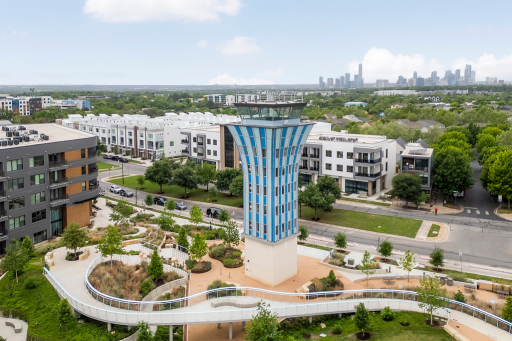
In the Mueller neighborhood, specifically, Zillow reports the average home value at $701,817, down about 1.8% year-over-year. That's a softer number than the broader Austin market in percentage terms - reflecting Mueller's premium positioning - but it's still a correction worth acknowledging.
Here's the important context, though: Mueller's fundamentals haven't changed. The walkability, the parks, the proximity to downtown and UT, the weekly Farmers' Market, the community identity - none of that has weakened. What's changed is the price-to-supply balance, and that's exactly what creates a buying opportunity.
A price dip in a market with strong fundamentals isn't a reason to panic - it's a reason to pay attention.
For a closer look at how Mueller's market is performing month by month, I keep a running Real Estate Market Updates playlist on YouTube - check the most recent video for current data.
Why Temporary Declines Are Part of the Story
The Case-Shiller data going back decades shows a consistent pattern: declines happen occasionally, but they're temporary. Even the steep drop following the 2008 financial crisis eventually reversed - and by 2013, national prices were climbing again. By 2022, they had more than doubled from their post-crash lows.
What history consistently shows is that buyers who purchased during or just after a price dip and held their homes for at least five years almost universally came out ahead. The five-year threshold is the conventional minimum for a reason: it's generally enough time to ride out short-term volatility and begin capturing the upward trend.
This is especially relevant for anyone eyeing Mueller or the broader East Austin area. If you're planning to make Austin home for the long haul, the current pricing environment - where sellers have more days on market and buyers have more negotiating room than they've had in years - could represent one of the better entry points we've seen since 2019.
Curious about what your options look like right now? My post on whether to wait on rates or move forward now walks through the timing question in detail.
The Real Goal: Building Wealth Over Time
Home ownership isn't a get-rich-quick strategy. It's a wealth-building mechanism that works over time. When you buy a home and hold it, two things happen simultaneously: your mortgage balance decreases (building equity) and - historically - the home's value increases (building wealth). That combination is hard to replicate with any other asset accessible to most families.
Renters, by contrast, build no equity in the homes they occupy. Every payment goes entirely to someone else's wealth. There are absolutely times when renting is the right call - but the cost of never owning, compounded over decades, can be substantial.
If you're weighing the rent-versus-buy question for Austin specifically, I'd encourage you to read my post on The Ten Surprising Costs of Buying a Home - it'll give you a realistic picture of what ownership actually costs beyond the mortgage payment.
And if you're still asking yourself whether the timing is right for you personally, my post on 10 questions to answer before you buy a home is a good place to start.
The Bottom Line
Home prices have a long, well-documented track record of rising over time. Short-term declines happen - Austin is experiencing one right now - but historically they've been temporary. If you're planning to stay for five or more years, the long-term trend works in your favor.

That doesn't mean you should buy under pressure or before you're financially ready. It means that the fear of a price decline shouldn't be the thing stopping you from moving forward when everything else lines up. If you're ready - financially, personally, and practically - the long-term fundamentals of homeownership are squarely on your side.
If you'd like to talk through what the current market means for your specific situation in Mueller or the broader Austin area, I'm always happy to have that conversation.
Q&A
Q: Are Austin home prices going to keep dropping in 2026?
Austin is experiencing a correction after its pandemic-era run-up. As of early 2026, median prices are down roughly 2–3% year-over-year - a modest decline, not a crash. Most analysts expect prices to stabilize or modestly recover in late 2026 and into 2027 as inventory normalizes.
Q: Should I wait for home prices to bottom out before buying?
Nobody can reliably identify a market bottom in real time - that only becomes clear in retrospect. If you wait for the "perfect" moment, you risk missing it entirely. A better approach: buy when you're financially ready and plan to stay for at least five years.
Q: What happens to my home's value if prices drop after I buy?
Short-term paper losses are real but typically temporary. Homeowners who hold through a downturn and allow time for the market to recover have historically come out ahead. The key variable is time horizon - five or more years is the conventional threshold for riding out volatility.
Q: What's driving home price appreciation nationally?
Three main forces: persistent housing demand (people always need somewhere to live), chronic undersupply of homes nationally, and general inflation that pushes up the cost of materials and land. These fundamentals don't disappear during market slowdowns.
Q: How is Mueller different from the broader Austin market?
Mueller has shown more pricing resilience than many Austin submarkets due to its walkability, amenities, community identity, and location. While prices have softened - down roughly 1.8–4.8% depending on the data source - the neighborhood's fundamentals remain strong and demand remains relatively consistent.
Q: Is now a good time to buy in Mueller?
For buyers planning to stay five or more years, the current environment offers more inventory, more negotiating leverage, and better pricing than the 2021–2022 peak. Whether it's the right time for you personally depends on your financial readiness, employment stability, and plans.
Q: How long should I plan to stay to make buying worthwhile?
The conventional guidance is at least five years. That's generally enough time to recoup transaction costs (agent commissions, closing costs, etc.) and begin capturing the appreciation trend. Austin's historically strong job and population growth have sometimes compressed that timeline, but five years is a reasonable planning horizon.
Q: Does renting make more sense than buying in Austin right now?
That depends entirely on individual circumstances. Renting offers flexibility; buying builds equity. If you're not sure you'll stay, renting is often the smarter short-term move. If you're rooted in Austin for the long term, buying - especially in the current buyer-friendly market - builds wealth that renting simply can't.
Q: What's the five-year outlook for home prices nationally?
Most forecasters expect modest appreciation in the 2–4% annual range nationally over the next five years, with Sun Belt markets like Austin potentially recovering to stronger gains once inventory normalizes. No forecast is guaranteed, but the structural forces supporting home values haven't changed.
Q: How do I know if I'm financially ready to buy?
Key indicators: stable income, savings beyond your down payment (for closing costs and reserves), a workable debt-to-income ratio, and a realistic monthly budget that doesn't stretch you thin. A pre-approval conversation with a lender is a good first step to get a concrete picture.